
TMS Spotlight: The Perfect Double Feature

(New Line Cinema / DreamWorks Pictures)
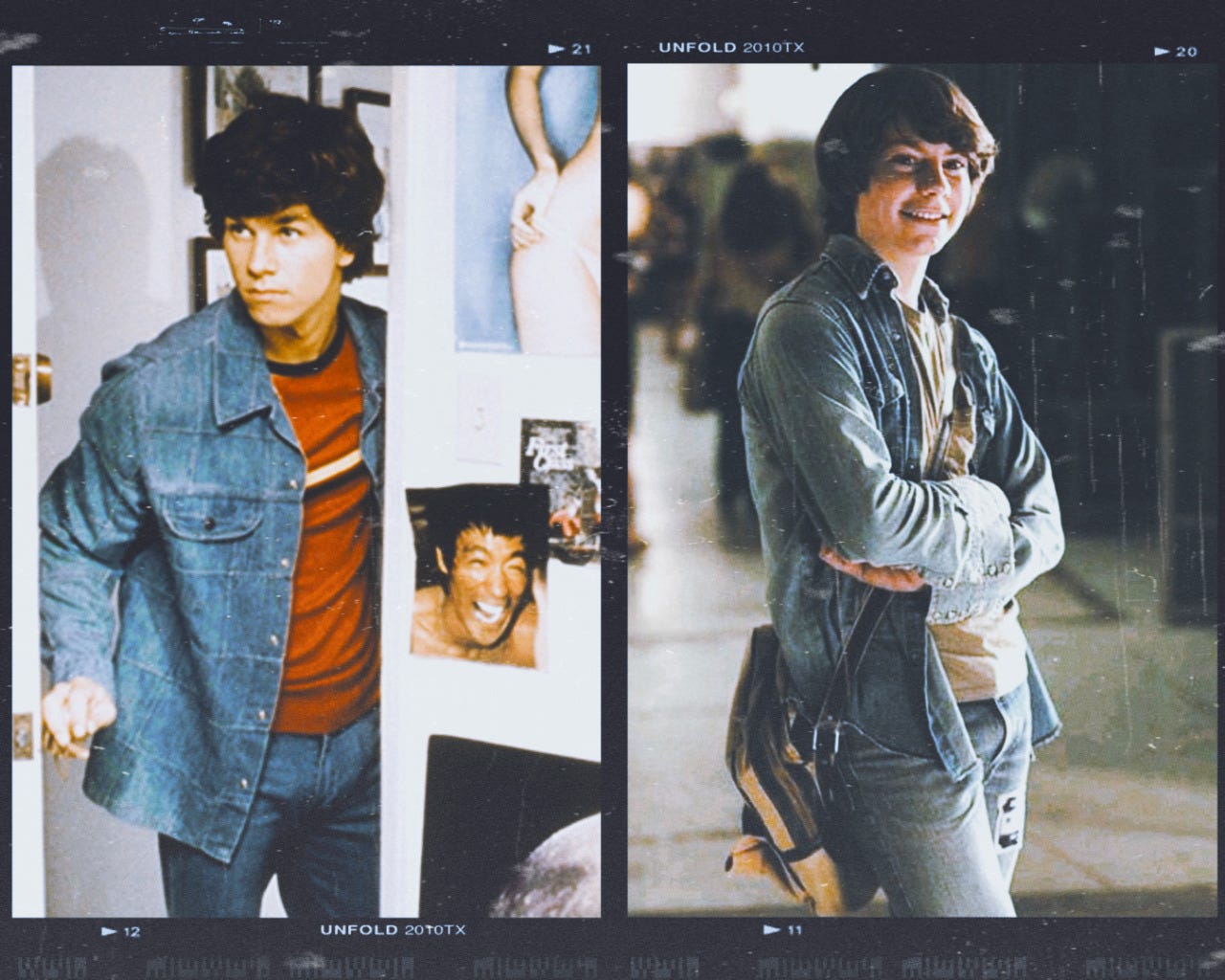
Whenever I see an article/listicle on cinema double features, or social media threads where fans share their favorite movies to watch back-to-back, my combo choice is always the same: Paul Thomas Anderson’s Boogie Nights (1997) and Cameron Crowe’s Almost Famous (2000). Much like a 2024 article I wrote on my favorite ‘quadruple feature’ of George Lucas’ American Graffiti (1973), John Hughes’ Sixteen Candles (1984), Richard Linklater’s Dazed and Confused (1993) and Greg Motolla’s Superbad (2007); my fave double feature is about similar themes, tone, setting and ‘vibes’ more than movies directly linked to each other through the same story universe or film creators. Both Boogie Nights and Almost Famous take place in mid-20th century southern California and follow a boy who gets swept up into a rather controversial community [the porn industry in Boogie Nights and the rock music scene in Almost Famous], and instead of either film coming off as hokey or exploitive, they become rather genuine, effective ‘found family’ stories.
While both movies did well with critics upon release and were nominated for many awards at the time, their followings and legacies have no doubt grown with time and continue to find new fans. It helps, of course, that Anderson is considered one of the best filmmakers of his generation and Crowe has a very interesting backstory and trajectory in entertainment. It might not be a surprise Boogie Nights and Almost Famous were stemmed from personal influence by the writer-directors either. Anderson grew up in the San Fernando Valley—historically where porn studios operate—in the 1970s and 1980s just like Boogie protagonist Eddie Adams/Dirk Diggler. Crowe’s main character in Famous, William Miller, is a transparent self-insert in an already autobiographical story based on the director’s career origins as rock journalist during his teens.
Though PTA has never worked in pornography, Boogie Nights is as much a love letter to the greater LA area as most of his other films, and we can see he also had an authentic fascination with the life and career of ‘70s pornstar John Holmes to inspire his own fictional character. Almost Famous on the other hand, is the ultimate mix of Crowe’s recognizable style and trademarks while reflecting on his own past. For the leading man in Boogie Nights, global heartthrob Leonardo DiCaprio suggested Boston based rapper-turned-actor Mark Wahlberg, a friend and recent co-star from Scott Calvert’s The Basketball Diaries (1995), to Anderson after DiCaprio himself opted out of the film for James Cameron’s Titanic (1997). Following many audition tapes and script readings from unknowns all over the US, local Salt Lake City teenager Patrick Fugit was ultimately cast as Almost Famous’ youthful lead. Both young men were very new to acting at the time of their productions, and had a fresh, natural presence that worked very well for their characters. One of the few, but consistent, criticisms about Almost Famous over the years is how some viewers feel Fugit’s performance might be a little too green in its awkward earnestness. But I sense this was intentional stunt casting on Crowe’s part and supposed to reflect how he felt as an unpopular high schooler suddenly jumping into a professional rock tour.

(New Line Cinema / DreamWorks Pictures)
Boogie Nights star Julianne Moore was nominated for Best Supporting Actress at the Oscars for playing veteran adult film performer Amber Waves, as was Kate Hudson for co-starring as the groupie queen who also loves the music, Penny Lane, in Almost Famous. These ladies are the objects of Dirk’s and William’s desires to unrequited results. Dirk & Amber are a Freudian filled affair with Amber babying Dirk the way she would her own son she’s not allowed custody of because of her history with porn and drugs, yet the pair are having sex on camera and in private. William & Penny are much more innocent in that the 15-year-old boy has a big crush on the slightly older blonde who in return only has eyes for cool guitarist Russell Hammond (Billy Crudup). William admires Russell’s effortless hipness and is intimidated by his unpredictable rockstar behavior before becoming disillusioned with the musician’s aura the more time they spend together; dissimilar to how Dirk sees longtime porno director Jack Horner (Burt Reynolds) as a paternal figure before abruptly dropping Jack from his life when Dirk becomes too hooked on cocaine. Both movies even feature respected character actor Philip Seymour Hoffman in two completely different supporting roles: gay, dweeby set gaffer Scotty in Boogie Nights and portraying real-life, alternative, underground music critic Lester Bangs in Almost Famous.
The memorable use of retro songs in Boogie Nights and Almost Famous has been noted in discussions and critiques on each film. Almost Famous has one of the best received movie soundtracks of all time, consisting of popular singles and deep cuts from the early ‘70s, including ‘The Wind’ by Cat Stevens, ‘Go All the Way’ by the Raspberries, ‘Feel Flows’ by the Beach Boys, ‘Future Games’ by Fleetwood Mac and ‘Tangerine’ by Led Zeppelin. Not to mention the famous sequence where the characters sing along to Elton John’s ‘Tiny Dancer’ on the tour bus. Whereas the Boogie Nights soundtrack might be the greatest compilation of ‘70s/’80s one-hit wonders out there, such as ‘Best of My Love’ by the Emotions, ‘Driver’s Seat’ by Sniff ‘n’ the Tears, ‘Jessie’s Girl’ by Rick Springfield and ‘Magnet & Steel’ by Walter Egan. Unlike Crowe’s characters, who were all self-imposed experts on rock history, Anderson felt that his own characters wouldn’t be the type of people to actively pay attention to new records or have vinyl collections, and probably got most of their music exposure from the radio, TV programs, soundtracks, and the like. The instrumental scores provided by Michael Penn for BN and Nancy Wilson for AF offer an atmospheric touch as well.
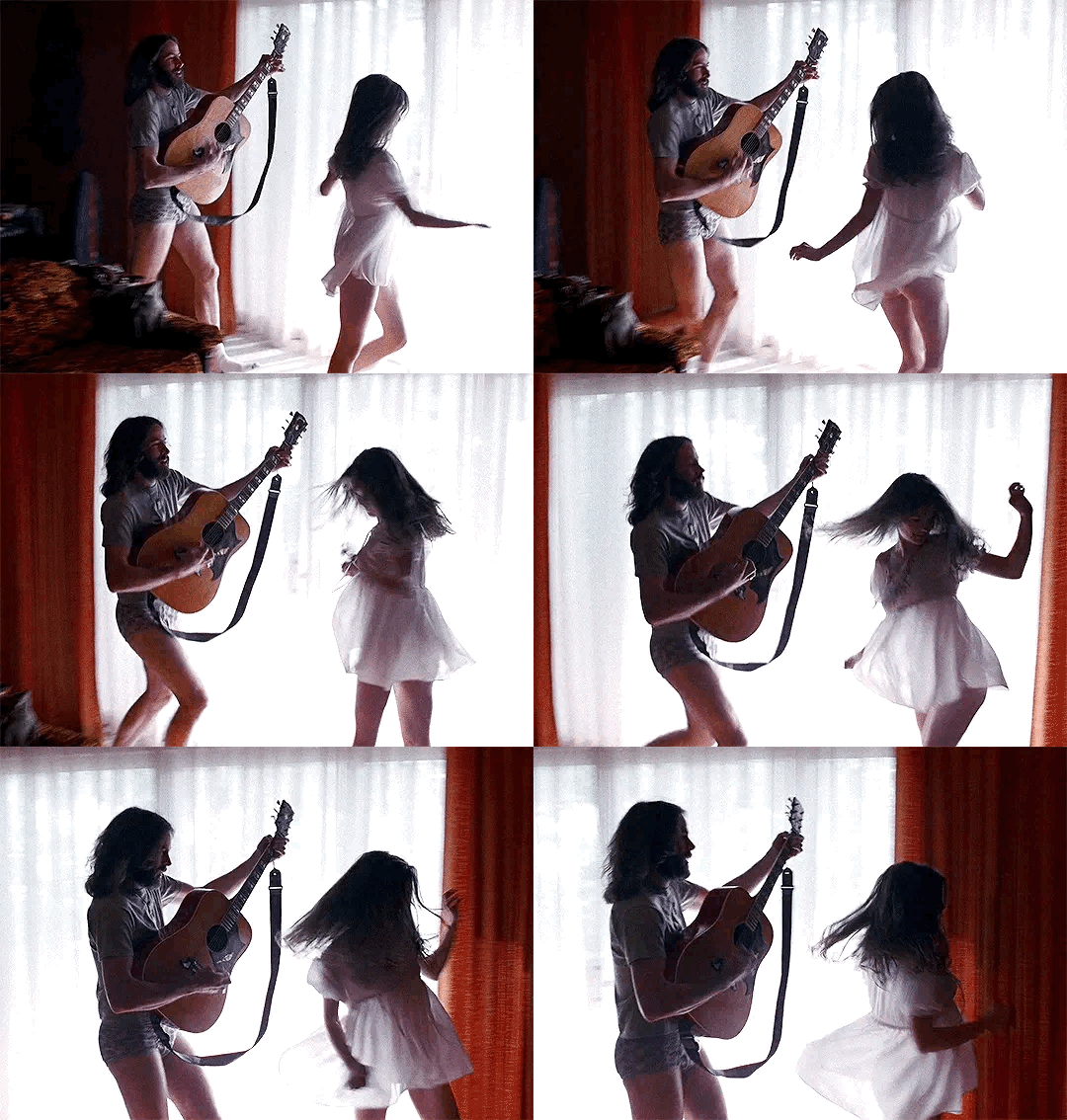
What I love about Almost Famous and Boogie Nights—besides completely vibing with my interests as a fan of ‘70s-80s pop culture—is how these stories are deliberately set in arguably the sleaziest, sketchiest entertainment-based communities of their eras, and yet, have legitimate heart and sincerity. Crowe and Anderson care about their characters and the worlds they’ve created for them. And though we like the people on screen, the films don’t glamorize or sugarcoat the dubious, immoral aspects of their environments [especially towards women]. We sympathize with Jack and Amber in Nights, but we also see them recruit two minors—Dirk and a high school dropout, ‘Rollergirl’ (Heather Graham)—into the porn industry, as well as Dirk & Amber’s later developed relationship. Most of the characters nearly throw away their lives because of excessive drug use which gets them in trouble with the law. One of Jack’s longtime producers is arrested for pedophilia. Some movie fans, including myself, often joke that Boogie Nights is just Martin Scorsese’s Goodfellas (1990), but with pornstars instead of gangsters because the rise-and-fall story is beat for beat parallel to the earlier classic. This isn’t necessarily a detriment since I think PTA is a gifted enough artist to leave his own mark, and it’s especially impressive he knocked it out of the park on only his second feature.
Although fans enjoy Almost Famous for its whimsical, endearing qualities, some viewers have accused Crowe of downplaying the seedier elements of rock tours and concerts, even with Crowe’s own experiences used for the script. To be honest, I’ve never really gotten this complaint and find it a bit dishonest if you’ve actually paid attention to the movie. It’s a little insane both William the fictional character and Crowe in real life were allowed to travel with a famous rock band for weeks at a time, surrounded by illegal instances of drugs, sex and other debauchery, instead of studying at home. Another groupie, Anna Paquin’s Polexia Aphrodisia, looks just as young as William. Penny Lane is the fan favorite from Famous, yet even she gets called out for being allegedly unrealistic and glorifying an outdated living. I don’t know how you can claim this when we literally see the band trade her for a case of beer as if she were an object, almost overdose on quaaludes after this fact, and then completely abandon the groupie life by moving to Morocco. What else do you need for Crowe to acknowledge groupies are unethical? The use of Stevie Wonder’s ‘My Cherie Amour’ while William watches two medical aides pump Penny’s stomach certainly comes off more ironic more than anything else. If anything, the girls in the film are nicer than a lot of real groupies usually were.

But beyond this, Boogie Nights and Almost Famous are perfect for those who want to get sucked into niche sectors within vintage showbusiness. Over the years there have been attempts to rehash the success of each classic, most obviously Stephen Herek’s Rockstar (2001), also starring Wahlberg, and James Cox’s Holmes biopic Wonderland (2003), but none have lived up to the hype of the originals. PTA revisited 1970s LA with Inherent Vice (2014) and Licorice Pizza (2021), and CC continues to make rock themed projects like the documentaries The Union (2011), Pearl Jam 20 (2011) and David Crosby: Remember My Name (2019), and the short-lived cable series “Roadies” (2016) while the initial masterpieces live on. Funny enough almost a year ago “Survivor” host Jeff Probst listed Almost Famous and Boogie Nights as two of his favorite movies to Letterboxd’s YouTube channel for pretty much the same reasons as mine. “These filmmakers take you into these giant, sprawling worlds, whether it’s music or the porn industry or Hollywood. But then inside are these tiny, personal stories. And I love that kind of storytelling where you feel like you’re emersed in a world that’s super specific.”
[Editor note: I’ve noticed some of the e-mail responses to my articles have been going straight to my spam folder instead of my inbox, making it possible for me to not notice the reply. If you would like to contact me, it might be better to directly message me on my Substack account. Or, if you’re feeling generous, you can upgrade to a paid subscription and leave a comment right on the article you’re reading. Thank you for your time and support of The Meggie Sue 😊]
That bus scene in almost famous is my favorite one of the movie.