
TMS Spotlight: The Acquired Timelessness of Jack Nicholson

(Columbia Pictures)
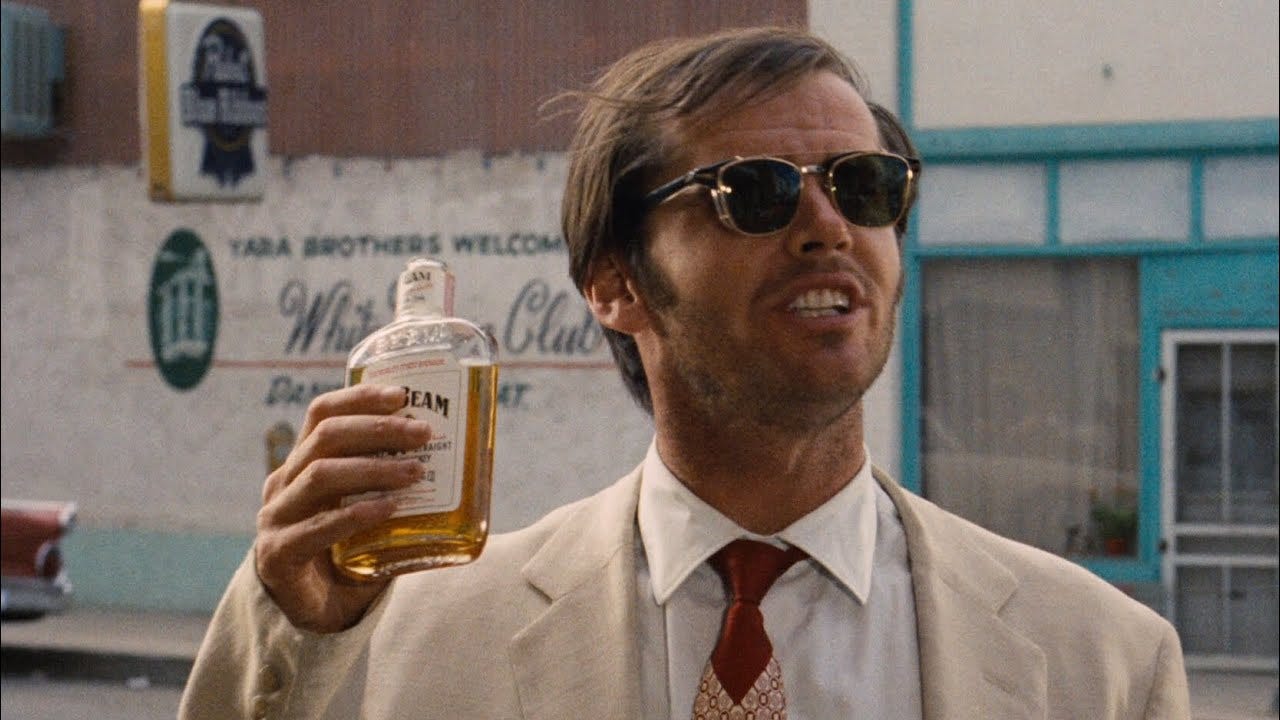
More than any actor I know of, I think I see Jack Nicholson named as someone’s favorite actor or the best actor, at least living. For someone so mainstream and respected, Jack is actually pretty unorthodox in his personality and career choices when you think about it. At his prime, he wasn’t an everyman like Tom Hanks or Jimmy Stewart; nor suave a la Cary Grant or George Clooney; or even typecast as the heavy like his peers Gene Hackman and Dennis Hopper. In fact, he has to be the one traditional leading man to play so many rebels, smart alecks and scoundrels throughout his stardom. Unlike his idol, Robert Mitchum, who could turn on enough charm to be cast as a romantic lead on a rare occasion, Jack successfully earned his reputation through a natural sardonic, wicked persona. With his receding hairline, devil eyebrows and average build, the three-time Oscar winner already didn’t look like a typical screen star. But watch any scene from his films, or a rare on camera interview with the legend, and you’ll instantly see the appeal. The week of his 89th birthday this past April, I had a YouTube binge on Jack related videos and found a presentation from a 2007 special screening for Miloš Forman’s One Flew Over the Cuckoo’s Nest (1975) at the AFI. In the middle of the 10 minute speech, Jack talks about how Nurse Ratched was the hardest character to cast. “None of the ladies wanted to play heavies during this period. Which kind of shocked me as a male chauvinist.” This sarcastic comment is pure ‘Jack.’ The perfect face and voice for morally grey New Hollywood.
To get the Jack Nicholson persona, you have to realize it could only come from someone with a background as dysfunctional as his. Growing up in Neptune City, NJ in the 1940s, raised by a mother and two sisters—only to learn much later that his mother was actually his grandmother, and his oldest sister was actually his mother who conceived him when she was 16—to going out to Los Angeles initially to visit some relatives in 1950 and sticking around for the rest of the summer working a gig at MGM’s cartoon building. By the mid-1960s, Jack—also known as ‘Nick’ to friends—was a player in B-movies such as Little Shop of Horrors (1960), The Raven (1963) and The Terror (1963), all directed by Roger Corman; Flight to Fury (1964), The Shooting (1966) and Ride in the Whirlwind (1966), directed by Monte Hellman; and guest-starred on TV shows like NBC’s “Dr. Kildare” (1966) and CBS’ “The Andy Griffith Show” (1966-67). Something most people don’t realize about Jack is that he was actually a scriptwriter for some B-movies early on as well. His mentor, Corman, even went on to say Jack could have easily had a full career as a writer if he wanted to, with Flight to Fury, Ride in the Whirlwind, Corman’s The Trip (1967) and Bob Rafelson’s Monkees vehicle Head (1968) as some of the movies he scripted. Though he apparently already had potential as either an animator or screenwriter, Nick maintained that his goal was to be a performer.
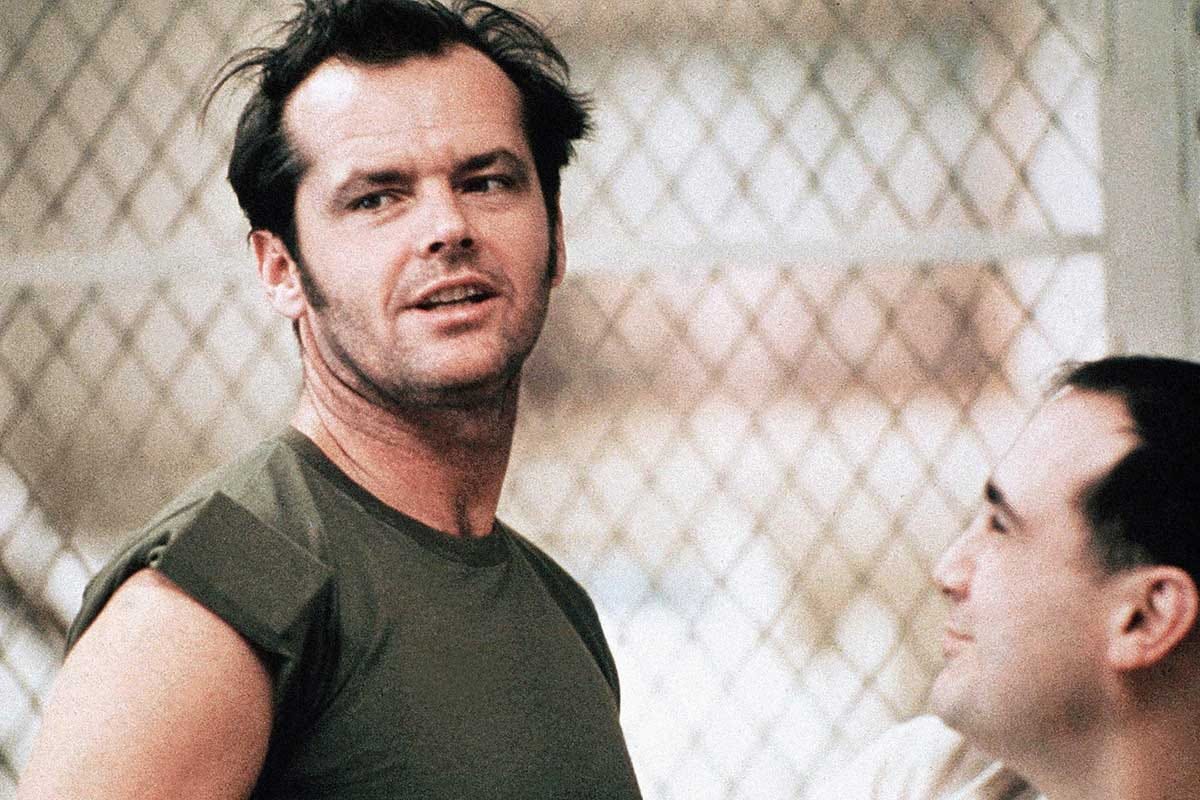
A couple things I’ve always found interesting about Jack are that 1) he had very little training or interest in stage acting, even at the beginning of his career; and 2) he didn’t seem to gravitate toward working with the big studio directors once he was famous. His regular collaborators were on the smaller scale, such as Corman, Hellman, Rafelson and Mike Nichols. Rafelson directed Jack in his first Oscar nominated performance for Best Actor with Five Easy Pieces (1970) [a single year after Jack’s first nomination, Best Supporting Actor, for Dennis Hopper’s Easy Rider (1969)]; and a year later he starred in Nichols’ Carnal Knowledge (1971). Five Easy Pieces and Carnal Knowledge are near the top of my favorite Nicholson starring features, and the earliest instances of Jack’s famous on-screen alter ego. A lethargic, self-loathing delinquent whose only outlet for his problems is aggression. Like his own spin on the ‘angry young man’ type from English kitchen-sink dramas of the early/mid-1960s. Jack would expand on this role in Hal Ashby’s The Last Detail (1973), before proving his smooth speaking voice and devil-may-care attitude could work as noir-esque gumshoe Jake Gittes in Roman Polanski’s Chinatown (1974), and as counterculture anti-hero Randle McMurphy in Cuckoo’s Nest—the latter which won him his first Oscar for Lead Actor. Jack once joked, “I don’t make movies, I make classics.” While he probably has been in more classic films than anyone else from his generation, his legacy isn’t immune to some duds as well, as anyone who has watched Nichols’ The Fortune (1975), Arthur Penn’s The Missouri Breaks (1976) or Elia Kazan’s The Last Tycoon (1976) can attest. Jack even tried a hand at directing a few times with Drive, He Said (1971), Goin’ South (1978) and Chinatown’s forgotten sequel The Two Jakes (1990), which only reminded both the star and his fans that he is at his best in front of the camera.
(United Artists)
Jack’s career was fortunately rejuvenated starring in Stanley Kubrick’s horror classic The Shining (1980) and pairing up with writer-director James L. Brooks, most fruitfully through Brooks’ dramedies Terms of Endearment (1983) and As Good as It Gets (1997), which won Jack his second and third Academy Awards. From there, the latter half of his career would be a mix of hits and flops, featuring Warren Beatty’s Reds (1981), George Miller’s The Witches of Eastwick (1987), Brooks’ Broadcast News (1987), Tim Burton’s Batman (1989), Rob Reiner’s A Few Good Men (1992) and Burton’s Mars Attacks! (1996) as the former. As he aged, the Jack Nicholson schtick became less intimidating and more exaggerated to comedic effect. The 2000s would be very sporadic for the legend, starring in Alexander Payne’s About Schmidt (2002), Nancy Meyers’ Something’s Gotta Give (2003) and Martin Scorsese’s The Departed (2006) as completely different characters that fit his mold, and ultimately the big three he would subtly end his legacy with. Yes, even appealing to critics and audiences four decades into fame, Jack retired in 2010 right after his fourth and final collab with Jim Brooks, How Do You Know was released. Rather than carry on as a working actor until the very end, Jack chose the less common route of retiring while he was still a top draw and never going through a legitimate ‘cash grab’ period.
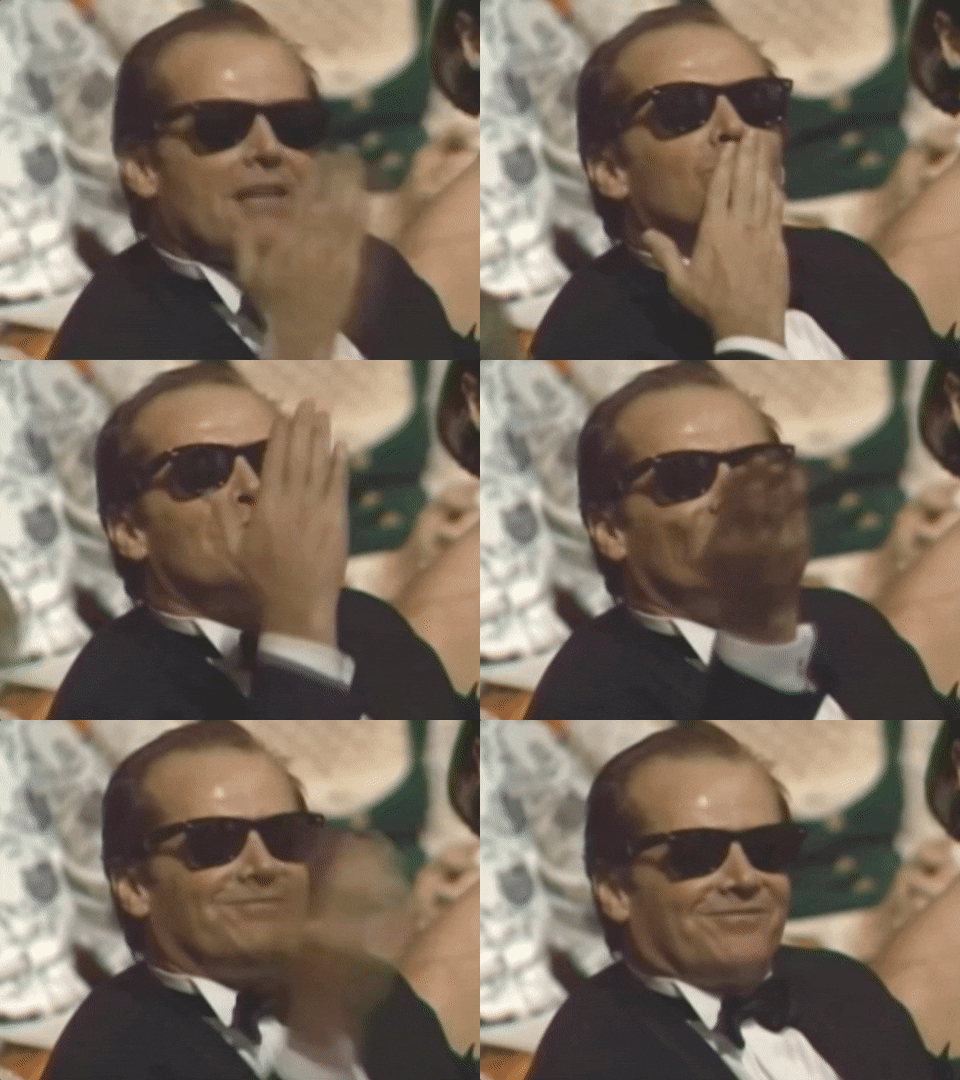
These days, most of the few updates we get on the screen icon are from his daughter Lorraine [b. 1990] on social media, whom Jack seems to spend most of his time with, along with oldest daughter Jennifer [b. 1963], son Ray [b. 1992] and grandson Duke [b. 1999]. The Nicholson image also incorporates the actor’s very colorful personal life, including fathering five children between 1963 and 1994; briefly marrying his one and only wife, former co-star Sandra Knight, in 1962-68; having a longterm, highly publicized on-again/off-again relationship with model-actress Anjelica Huston from 1973 to 1990; reported flings with starlets Michelle Phillips, Mimi Machu, Bebe Buell, Zouzou, Jill St. John, Susan Anspach, Winnie Hollman, Lara Flynn Boyle and Kate Moss; trashing the windshield of a Mercedes-Benz for supposedly cutting him off in traffic; his lifelong love of basketball, and in particular the LA Lakers; getting kicked out of a Lakers game in 2003 for yelling at a referee; unwisely lending his house to Roman Polanski on March 10th, 1977; opting to ignore televised interviews and have his relevance exist through mystique; always wearing his sunglasses to public events. The most impressive Jack anecdote might be how he’s seriously maintained long friendships with fellow actors like Hopper, Warren Beatty, Bruce Dern, Harry Dean Stanton, Teri Garr, Toni Basil, Carol Kane and Millie Perkins. Jack lobbied hard for screenwriter Carole Eastman at the beginning of her career through The Shooting and Five Easy Pieces as well, showing his authentic self isn’t superficial.
I would argue no one is more classically ‘movie star’ than Jack, at least contemporarily. Everyone has their own impression of the man, and it’s all by his design, and seamlessly. Largely paving the way for young male method actors and bad boys from Christian Slater, Mickey Rourke and Sean Penn to Leonardo DiCaprio, Ryan Gosling and Alden Ehrenreich. The lunacy of the Joker, the hysterics of George Hanson, the insanity of Jack Torrance, the blunt charisma of Garrett Breedlove, the lethargy of Warren Schmidt. Jack ran the gamut from A to Z.
Editor note: If you enjoy reading my newsletter, please consider upgrading to a monthly or yearly paid subscription. If you don’t feel comfortable committing to an annual payment, you can also send a donation to my PayPal account instead. Since this is currently my main source of income creatively, it would be greatly appreciated and very helpful. Thank you again for your time and support of The Meggie Sue. 😊
One of my favorite actors for sure.