TMS Muse of the Week: Margot Kidder

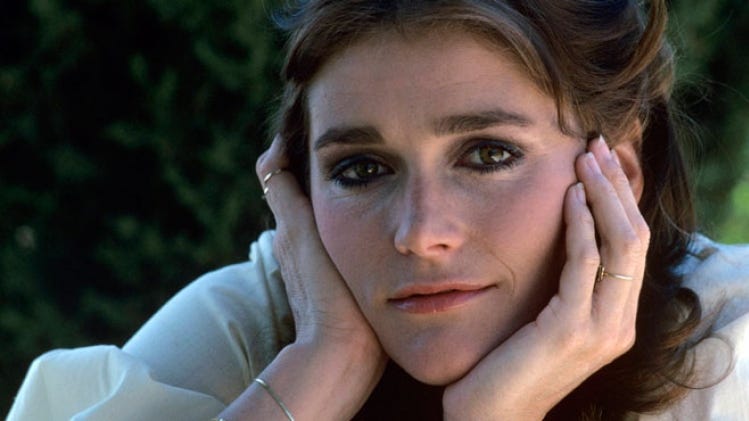
(MPTV Images)
When Canadian actress Margot Kidder comes up in conversation, there are two images movie fans instantly think of: Lois Lane and a 1970s scream queen. When she wasn’t reporting all the crazy adventures hitting Metropolis and flirting with Superman and his alter ego Clark Kent, she was co-starring in cult favorites in the horror genre. Raised in the northern Canada towns of Yellowknife and Labrador City, Margot claimed she didn’t even see her first movie until high school because there were no TVs at home or movie theaters near her neighborhoods. The acting bug hit her at age 12 when her mother took her to a 1961 performance of the original Broadway production of Lee Adams & Charles Strouse’s ‘Bye Bye Birdie.’ Though she considered going into either politics or film editing during school; Margot ended up becoming a model and TV actress in both Toronto and Vancouver until the raven haired starlet officially crossed over to Hollywood alongside Gene Wilder in Waris Hussein’s comedy Quackser Fortunes Has a Cousin in The Bronx (1970). While not exactly a huge hit, Margot got decent reviews for her performance. But surprisingly, she followed up with less humor filled features; starting with Brian De Palma’s psychological horror film Sisters (1972) where Margot played a pair of twins formerly conjoined and co-starred with her best friend, Jennifer Salt. From there, Margot was cast as the rowdiest and crudest sorority sister in Bob Clark’s slasher Black Christmas (1974), the lead in J. Lee Thompson’s mystery-thriller The Reincarnation of Peter Proud (1975), and rounded out the decade as the female star of Stuart Rosenberg’s supernatural blockbuster The Amityville Horror (1979).
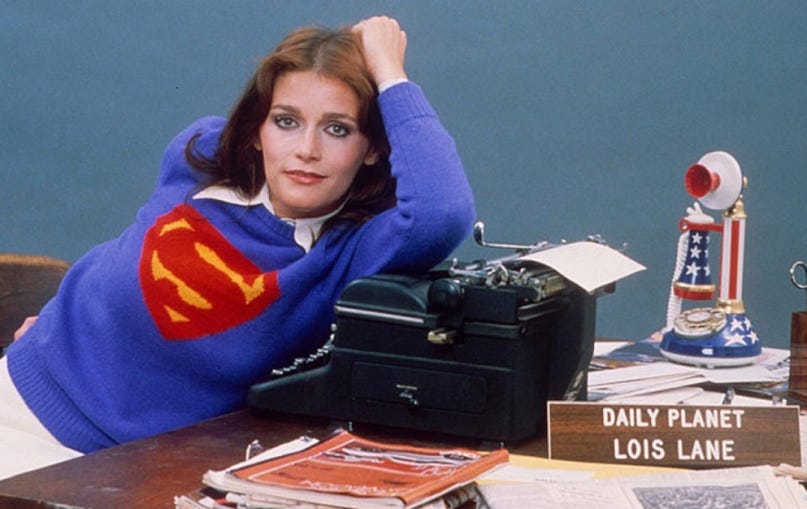
(Warner Bros)
In between appearing in some popular scary flicks, Margot also showed off her dramatic range in George Roy Hill’s The Great Waldo Pepper (1975), Thomas McGuane’s 92 in the Shade (1975), and Paul Mazursky’s Willie & Phil (1980), a US remake of François Truffaut’s classic Jules & Jim (1962). But her big breakthrough, the moment Margot became a household name, was when Richard Donner’s Superman was released in 1978. To many, this interpretation of the comic book hero and his universe is the most influential and best executed, including the portrayal of the Lois/Clark relationship, and the actress’ performance became the fan favorite for the love interest. Margot later co-starred with Christopher Reeve and co. in the three Superman sequels made throughout the 1980s. After embracing her place in pop culture as the essential cinematic Lois, Margot guest starred on the 2004 episodes ‘Crusade’ and ‘Transference’ of the WB’s popular prequel series “Smallville;” and reunited with Donner for his successful film adaptation of Maverick (1994).
Off camera, Margot had relationships with interesting men like Sisters director Brian De Palma, blockbuster pioneer Steven Spielberg, 92 in the Shade director Thomas McGuane, Superman script supervisor Tom Mankiewicz, actor John Heard, comedian Richard Pryor, her Willie & Phil co-star Michael Ontkean, Prime Minister Pierre Trudeau, House Speaker Willie Brown, and filmmaker Philippe de Broca, who directed her in the epic Louisiana (1984). Kidder and McGuane also had a child together, daughter Maggie [b. 1975]. Her real-life personality is said to have been as rebellious and out-going as a lot of the characters she played on screen. Sadly, this is because of her mental history as much as it is from being free-spirited. As a young woman, Margot dealt with incidents of depression and mental breakdowns before being diagnosed with bipolar disorder in middle age. Drugs, a bad car accident in 1990—which prevented her from working for two years—and losing a whole manuscript for a memoir she was writing to a computer virus in 1996 were also serious personal blows to the star. The sudden death of longtime friend Carrie Fisher in 2016 reportedly also had a big impact on Margot emotionally, and unfortunately influenced her to take her own life in 2018. A very sad end to a fascinating woman with her own place in pop culture osmosis.